
Problem-solving skills are vital for students' academic success and personal growth. Nurturing these involves embracing failures, cultivating empathy, and promoting a growth mindset. Educators can enhance critical thinking, creativity, and digital literacy through structured problem-solving techniques, personalized learning paths, and data-driven decisions. Collaborative problem-solving, measured progress tracking, and inclusive teaching practices result in improved academic performance, enhanced coping mechanisms, and robust life skills.
Problem-solving skills are essential for students’ academic success and future career prospects. In today’s complex world, the ability to navigate challenges creatively and effectively is a valuable asset. However, cultivating these skills can be a challenge in itself, as educators strive to prepare students for an ever-evolving landscape. This article delves into practical strategies for fostering robust problem-solving abilities among students, equipping them to confront academic and real-world obstacles with confidence and ingenuity. By the end, readers will grasp the significance of these skills, understand the underlying cognitive processes, and acquire actionable methods to enhance learning outcomes.
- Understand the Importance of Problem-Solving Skills
- Foster a Growth Mindset for Learning and Resilience
- Encourage Critical Thinking Through Engaging Activities
- Teach Structured Problem-Solving Techniques Effectively
- Promote Collaborative Problem-Solving in Groups
- Measure and Track Student Progress: Result in Enhanced Abilities
Understand the Importance of Problem-Solving Skills

Problem-solving skills are a critical component of education, equipping students with tools to navigate challenges and fostering independence. Understanding their importance is the first step in developing these abilities; it’s about recognizing that problem-solving isn’t merely about finding answers, but also learning from failures, cultivating empathy, and embracing responsibility. In today’s rapidly changing world, where complex issues demand innovative solutions, this skill set becomes an essential asset for students’ future success. Research indicates that early cultivation of problem-solving can enhance critical thinking, creativity, and even academic performance.
Beyond academic benefits, effective problem-solvers develop coping mechanisms for stress, a vital aspect of well-rounded development. They learn to approach challenges with resilience, recognizing that setbacks are opportunities for growth. This mindset is crucial in balancing the pressure of academic expectations with mental health. Measuring success criteria, such as the ability to break down complex problems into manageable parts and apply logical reasoning, becomes an integral part of their learning journey. For instance, a student tasked with designing a sustainable city model doesn’t just find the answer in a textbook; they learn to research, analyze, and make informed decisions, developing a deeper understanding of urban planning principles.
Cultivating empathy is another key element within problem-solving education. By considering diverse perspectives, students can address issues from multiple angles, fostering an inclusive approach. This not only enhances their ability to solve problems in various contexts but also prepares them to collaborate effectively in diverse teams. To truly understand the impact of actions and develop robust problem-solving skills, students need guidance and support. Visit us at understandingimpactofactions.com to explore practical strategies and resources that can help educators and parents nurture these abilities in students, ensuring they are well-prepared for the challenges of today and tomorrow.
Foster a Growth Mindset for Learning and Resilience

Nurturing a growth mindset within students is a powerful strategy to foster both learning resilience and effective problem-solving skills. This approach encourages individuals to view challenges as opportunities for growth rather than fixed barriers. When students adopt this perspective, they become more inclined to persist through difficulties, embrace failure as a stepping stone to success, and ultimately achieve higher levels of understanding and creative outcomes. Research consistently shows that promoting a growth mindset can lead to significant improvements in academic performance, with students demonstrating enhanced problem-solving abilities and a deeper application of knowledge.
The process begins by creating an environment where mistakes are seen as valuable assets for learning. Teachers play a pivotal role in modeling this behavior, openly discussing their own learning journeys and acknowledging that struggles are integral parts of growth. Incorporating diverse teaching methods, such as project-based learning and hands-on activities, allows students to explore concepts actively, fostering a deeper understanding and encouraging creative applications of knowledge. This active engagement enhances digital literacy, enabling students to effectively navigate the vast amount of information available in today’s world.
Moreover, integrating social-emotional learning (SEL) into the curriculum is essential for developing resilient problem solvers. SEL programs teach students self-awareness, self-management, social awareness, relationship skills, and responsible decision-making. These competencies empower individuals to approach challenges from a calm and thoughtful perspective, enhancing their ability to optimize cognitive processes. For instance, teaching mindfulness techniques can help students manage stress during demanding tasks, allowing them to focus more clearly and make better decisions. By embracing these strategies, educators not only contribute to academic excellence but also equip students with essential life skills, ensuring a sustainable transformation that extends far beyond the classroom walls.
Cultural awareness in education is another critical aspect to consider when fostering growth mindsets. Recognizing and valuing diverse perspectives broadens students’ understanding of complex issues, encouraging them to approach problems from multiple angles. Incorporating culturally responsive teaching practices ensures that all learners feel seen and heard, promoting active participation and engagement. When students from various backgrounds work together, they gain insights into different viewpoints, leading to more innovative problem-solving approaches. This inclusive environment encourages the generation of creative outcomes that reflect a rich tapestry of ideas, ultimately enriching the learning experience for everyone involved.
Encourage Critical Thinking Through Engaging Activities

Encouraging critical thinking through engaging activities is a powerful strategy to develop problem-solving skills in students. This approach goes beyond rote memorization, fostering a deep understanding of concepts and encouraging young minds to think independently. By presenting students with complex scenarios and open-ended questions, educators can stimulate their ability to analyze, synthesize, and evaluate information using evidence to inform choices. For instance, instead of merely teaching historical events, teachers can prompt discussions on the causes and consequences, allowing students to form their own interpretations and develop analytical skills.
One effective method is integrating real-world problems into the curriculum. Presenting students with challenges that mimic those faced in everyday life or current events helps them see the relevance of their education. For example, a science class can explore environmental issues like pollution, prompting students to research potential solutions using scientific principles. This not only enhances learning but also equips them with strategic self-regulation skills, enabling them to manage time and resources effectively while finding creative coping mechanisms for stress that may arise during the process. Case studies and problem-based learning (PBL) are powerful tools in this regard, as they require students to collaborate, think critically, and apply their knowledge to find solutions.
Moreover, personalized learning experiences cater to individual needs and interests, making it easier for students to engage deeply with complex concepts. Adapting to changing landscapes of education, where technology plays an increasingly integral role, platforms that offer visit us at adapting to changing landscapes personalized learning anytime can provide tailored resources and challenges. This ensures students receive the support they need to develop robust problem-solving strategies. By combining engaging activities with structured guidance, educators can help students become independent thinkers who approach problems with confidence and a willingness to explore various solutions, resulting in improved academic performance and better preparation for future challenges.
Teach Structured Problem-Solving Techniques Effectively

Developing problem-solving skills in students is an essential aspect of education that prepares them for the challenges they’ll face throughout their academic careers and beyond. One effective approach to enhancing these abilities is by teaching structured problem-solving techniques. This method equips learners with a systematic framework to tackle complex issues, fostering critical thinking and creativity. The key lies in presenting these techniques as adaptable tools that can be applied across various subjects and scenarios, thereby encouraging a versatile skill set.
Implementing structured problem-solving requires a nuanced understanding of individual learning needs. By incorporating personalized learning paths, educators enable students to grasp concepts at their own pace. This adaptability is crucial in today’s rapidly changing educational landscape where static teaching methods may fall short. For instance, setting realistic targets based on student performance data allows for tailored interventions, ensuring that each learner receives the necessary support to overcome challenges. Utilizing technology for learning can further enhance this process; interactive platforms and adaptive software can provide customized problem sets, reinforcing skills through targeted practice.
Data-driven decisions play a pivotal role in refining problem-solving strategies. By analyzing student performance data, educators can identify common areas of difficulty and refine their teaching approaches accordingly. This iterative process ensures that the techniques taught remain relevant and effective. For example, tracking progress on problem-solving assignments might reveal specific concepts requiring additional reinforcement. Leveraging technology to track these insights enables teachers to make informed adjustments, resulting in tailored interventions that significantly impact student learning outcomes. Ultimately, by combining structured techniques with personalized learning and data-driven decisions, students gain robust problem-solving abilities, empowering them to navigate complex situations with confidence and success.
Promote Collaborative Problem-Solving in Groups
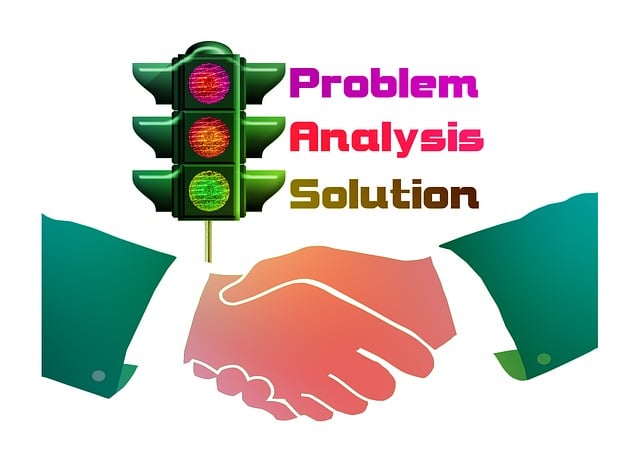
Promoting collaborative problem-solving in groups is a powerful strategy to enhance students’ critical thinking and decision-making abilities. When learners work together on complex tasks, they engage in knowledge sharing, diverse perspective integration, and peer support, resulting in more effective solutions. This approach fosters an environment where every student contributes uniquely, building upon one another’s ideas. For instance, in a mathematics class, small groups can tackle intricate word problems, encouraging students to explain their reasoning openly and learn from peers’ alternative strategies.
Using technology for learning amplifies these benefits significantly. Interactive digital platforms and collaborative tools enable real-time idea sharing and document editing, breaking down physical barriers. Online forums and video conferencing facilitate remote collaboration, accommodating diverse student needs and schedules. Moreover, data suggests that students in technology-enhanced collaborative environments demonstrate improved problem-solving performance and higher levels of engagement compared to their peers in traditional settings. However, educators must also address potential obstacles to success, such as digital literacy disparities or social anxiety in virtual spaces, by providing equitable access to technology and offering coping mechanisms for stress.
Overcoming these challenges requires a multi-faceted approach. Teachers can incorporate structured breaks during group work sessions to alleviate stress and encourage healthy communication. They can also model effective collaboration strategies, demonstrate active listening, and create inclusive environments where every student feels valued. Encouraging innovative ideas through open discussions and celebrating diverse solutions not only boosts students’ confidence but also fosters a growth mindset essential for robust problem-solving skills. Give us a call at [NAP/brand] to learn more about integrating these practices into your educational setting, empowering students to tackle challenges with creativity and resilience.
Measure and Track Student Progress: Result in Enhanced Abilities
Measuring and tracking student progress is a cornerstone of developing robust problem-solving skills, ultimately enhancing their academic performance and life preparation. By establishing clear goals and milestones, educators can guide students in accomplishing significant academic achievements. This process involves regular assessment and feedback mechanisms that serve as compasses for both teacher and learner. For instance, setting a goal to master algebraic equations by the end of a unit and then tracking the student’s progress through weekly quizzes and projects allows for timely adjustments to teaching strategies, ensuring the learner stays on course.
Tracking progress towards these goals fosters a growth mindset among students—an internal belief that abilities and intelligence can be developed over time. This perspective encourages resilience in the face of challenges, as learners view failures as stepping stones to improvement rather than definitive setbacks. A study by the National Academy of Sciences found that students who adopt a growth mindset demonstrate greater persistence and achievement in mathematics, highlighting the profound impact this mindset shift can have on problem-solving abilities. As educators, we must instill in our students the understanding that intellectual growth is a journey, not a destination—a key tenet of preparing global citizens for lifelong learning.
To effectively track progress, consider implementing data-driven methods tailored to each student’s unique needs and learning style. This might involve utilizing digital platforms or portfolios where learners can document their work, reflect on the process, and visually represent their growth. Such practices not only help in identifying areas of strength and weakness but also empower students to become active participants in their education, fostering a sense of ownership over their academic journey. Remember that tracking progress is not merely about reaching predefined goals; it’s about cultivating a culture of continuous improvement where each step forward—no matter how small—is celebrated as a victory on the path to becoming adept problem solvers.
For actionable steps, educators can start by breaking down complex topics into manageable units, setting achievable goals for each, and employing diverse assessment methods. Regular feedback sessions that focus on both strengths and areas for improvement should follow. By finding us at preparing global citizens for lifelong learning through these practices, we not only enhance problem-solving skills but also instill in students a love for learning—a cornerstone of academic excellence and personal growth.
By embracing these strategies, educators can foster a profound development in students’ problem-solving abilities. The key lies in a holistic approach that combines instilling a growth mindset, engaging critical thinking through diverse activities, and teaching structured techniques. Encouraging collaborative problem-solving further enhances this process, nurturing not only individual skills but also essential teamwork capabilities. Regularly assessing and tracking student progress is vital to ensure these skills are not just learned but mastered, resulting in improved academic performance and better preparation for real-world challenges. This comprehensive approach, as highlighted in this article, offers a clear roadmap for educators to empower students with the skills necessary to navigate complex problems effectively.