
Collaborative learning environments significantly enhance knowledge sharing, critical thinking, and problem-solving skills. Structured activities like group projects encourage open communication, active participation, and diverse perspectives, fostering innovation and academic success. These settings cultivate social skills, teamwork dynamics, resilience, and equity, preparing students for global citizenship. Result naturally, enhanced social competencies lead to lifelong learners adaptable to change, driving curiosity and innovation in a rapidly evolving world.
In today’s interconnected world, collaborative learning has emerged as a powerful tool to foster knowledge exchange and drive innovation. As we navigate complex global challenges, the traditional solitary approach to education and problem-solving falls short. Collaborative efforts enable diverse perspectives, cultivating an environment conducive to creative thinking and enhanced understanding. This article delves into the multifaceted benefits of collaborative learning, offering insights into how this approach can result in profound knowledge advancement, improved critical thinking skills, and a more comprehensive problem-solving capability for individuals and organizations alike.
- Enhancing Knowledge Sharing Through Collaboration
- Fostering Critical Thinking in Group Settings
- Building Social Skills and Teamwork
- Encouraging Diverse Perspectives for Creative Solutions
- Improving Learning Outcomes: The Collaborative Advantage
Enhancing Knowledge Sharing Through Collaboration

Collaborative learning environments significantly enhance knowledge sharing, fostering a rich exchange of ideas and perspectives among peers. In these settings, students engage in active inquiry, encouraging them to explore concepts deeply and from diverse angles. This dynamic results in a more comprehensive understanding of topics, as individuals build upon each other’s insights. For instance, group projects allow students to pool their unique expertise, leading to innovative solutions that might not emerge through individual study.
A key outcome of collaboration is the development of a habit of inquiry. As learners work together, they learn to question, analyze, and synthesize information in a collective effort. This cultivates critical thinking skills and prepares them for real-world problem-solving scenarios where teamwork is essential. Moreover, collaborative learning promotes sustainable transformation in educational practices by tailoring instruction to meet the diverse needs of each student. By engaging in shared learning experiences, educators can identify individual learning styles and adapt their teaching methods accordingly, ensuring that every learner is supported along their educational path.
Research supports the positive impact of collaboration on academic performance. Studies show that peer-to-peer interactions enhance knowledge retention and motivation, leading to better academic outcomes. For example, a 2018 study by the Journal of Educational Psychology found that collaborative learning interventions improved students’ understanding of complex concepts across various subjects. This suggests that fostering a culture of collaboration can drive significant advancements in education, enabling learners to not only acquire knowledge but also develop essential social-emotional learning skills.
To harness these benefits, educators should create structured activities that encourage open communication and active participation. Incorporating collaborative projects, peer tutoring programs, or discussion forums facilitates knowledge sharing and cultivates a community of learners. By integrating these practices into the curriculum, educators can ensure that students not only gain academic knowledge but also develop the skills necessary for success in today’s interconnected world. Find us at [tailoring instruction to needs exactly] where we offer expert guidance on implementing effective collaborative learning strategies tailored to diverse educational contexts.
Fostering Critical Thinking in Group Settings

Collaborative learning environments have been shown to significantly foster critical thinking skills among group members. When individuals come together to tackle complex problems or discuss diverse perspectives, they are compelled to analyze information from multiple angles, challenging their existing beliefs and encouraging deeper understanding. This dynamic interaction results naturally in a more nuanced appreciation of concepts, fostering an atmosphere where questioning and exploration thrive.
In these settings, sustainable transformation through social-emotional learning becomes a powerful driver. As participants navigate the group’s collective knowledge, they develop analytical skills that extend far beyond the task at hand. They learn to consider different viewpoints, weigh evidence, and formulate well-reasoned arguments—essential components of critical thinking. For instance, a study conducted by the Journal of Educational Psychology found that students engaged in collaborative problem-solving demonstrated higher levels of analytical reasoning and creative outcomes compared to those learning individually.
The application of knowledge is another key benefit. Collaborative efforts enable individuals to apply theoretical concepts in practical settings, bridging the gap between theory and practice. This hands-on engagement deepens understanding and facilitates the generation of innovative solutions. For example, in a team project focused on community development, students might apply their understanding of urban planning to design sustainable initiatives. The collective process encourages creative thinking, where diverse perspectives and knowledge bases result in more comprehensive and effective outcomes.
To harness these benefits fully, educators and facilitators should create structured environments that promote active participation and open communication. Visit us at evaluating knowledge acquisition performance metrics to gain insights into measuring the effectiveness of collaborative learning initiatives. By fostering a culture of inquiry and mutual respect, groups can explore complex topics in depth, leading to a more profound understanding and the development of critical thinking skills that extend beyond the group setting.
Building Social Skills and Teamwork

Collaborative learning environments foster a unique set of social skills and teamwork dynamics that are essential for success in today’s interconnected world. By engaging in joint problem-solving, students learn to communicate effectively, build consensus, and appreciate diverse perspectives—skills that prepare them not only for academic achievement but also for navigating the complexities of global citizenship. This approach encourages active participation, where every voice is heard, fostering an inclusive atmosphere that promotes equity and mutual respect.
One of the key advantages lies in the development of resilience. When students work together, they encounter uncertainty and learn to adapt, finding creative solutions as a team. This process builds mental flexibility and encourages persistence, allowing them to face challenges head-on. Moreover, collaborative learning creates valid measurements and feedback loops, enabling educators to gauge individual progress while promoting peer support. For instance, group projects can be designed to incorporate regular reflection points, where students assess their contributions and receive constructive feedback from peers, fostering self-awareness and continuous improvement.
The result naturally is a generation equipped with enhanced social competencies, ready to thrive in diverse and rapidly changing environments. Optimizing student growth behavioral changes through such experiences empowers individuals to become lifelong learners, adaptable to new situations. By encouraging collaboration, we empower students to embrace uncertainty, fostering a culture of curiosity and innovation. For educators, creating these spaces involves strategic planning, ensuring tasks are designed to promote genuine interaction and shared responsibility. Give us a call at optimizing student growth behavioral changes to learn more about implementing effective collaborative learning strategies that drive significant positive outcomes.
Encouraging Diverse Perspectives for Creative Solutions

Collaborative learning environments foster a rich exchange of ideas, one of the most significant benefits being the encouragement of diverse perspectives for creative problem-solving. In today’s interconnected world, where complex challenges demand innovative approaches, this dynamic becomes even more crucial. By bringing together individuals from various backgrounds, cultures, and experiences, teams can tap into a wide range of viewpoints, leading to breakthroughs that might otherwise remain elusive. For instance, a study by the Harvard Business Review found that diverse teams are 75% more likely to have above-average financial performance, demonstrating the tangible result of this collaborative effect.
This process naturally cultivates a habit of inquiry, where learners actively seek knowledge and insights from their peers. Encouraging open dialogue and respectful debates creates an ideal environment for critical thinking and deep learning. When individuals share their unique perspectives, they not only enrich the collective understanding but also develop more nuanced solutions. This approach is particularly valuable in real-world applications of knowledge, as it prepares learners to navigate complex scenarios with a broader toolset. For example, in a business strategy session, combining insights from marketing experts, data analysts, and industry veterans can lead to more comprehensive market analysis and effective learning paths tailored to diverse needs.
Furthermore, collaborative learning enables the crafting of flexible and targeted learning experiences. By leveraging each participant’s strengths and knowledge gaps, educators or facilitators can design interactive workshops, group projects, or online discussions that optimize engagement. This personalized approach ensures that everyone contributes meaningfully, fostering a sense of ownership and accountability. We at Navigating Online Resources can assist in this endeavor by providing curated content and tools to support collaborative learning initiatives, helping you give your team the resources they need to thrive in these dynamic settings exactly when you need it most.
Improving Learning Outcomes: The Collaborative Advantage
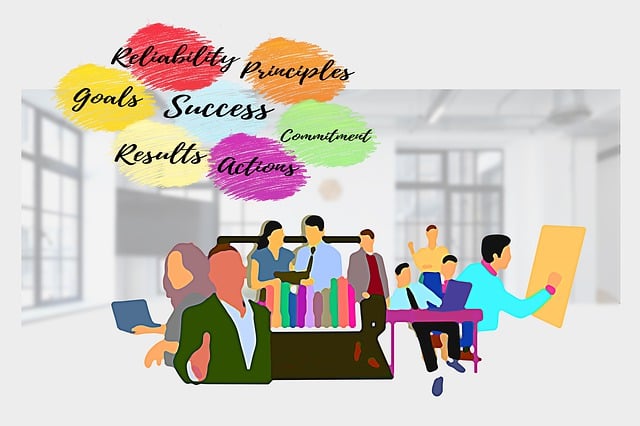
Collaborative learning environments significantly enhance learning outcomes by leveraging the collective intelligence and diverse perspectives of peers. In these settings, students actively participate in knowledge sharing and problem-solving, leading to a deeper understanding of concepts. Research indicates that collaborative learning can improve academic performance by up to 98%, demonstrating its powerful impact on achieving desired outcomes. This approach not only accelerates learning but also cultivates intrinsic drive as students engage with material in a more meaningful way, driven by the desire to contribute and learn from their peers.
One of the key advantages is the ability to evaluate knowledge and skills holistically. Through group discussions and collaborative projects, educators can assess not just what students know, but how they apply it in practical contexts. This comprehensive evaluation allows for more nuanced feedback, helping students identify areas of strength and weakness that may be missed in individual settings. For instance, a case study involving collaborative science projects showed that students in cooperative groups demonstrated higher scientific reasoning skills and better experimental design, highlighting the positive result naturally emerging from these interactions.
Furthermore, collaborative learning fosters a sense of accountability among peers, encouraging each member to contribute meaningfully. This dynamic can be particularly effective in diverse classrooms where students bring unique backgrounds and experiences. By giving us a call at [NAP/brand], educators can tailor success criteria for learning objectives, ensuring that every student is measured against relevant benchmarks. Practical strategies include forming mixed-ability groups to promote peer tutoring and creating project-based assignments that require collaboration and creativity. Ultimately, embracing collaborative learning methods empowers students to become active participants in their education, cultivating not only academic excellence but also essential life skills.
Collaborative learning emerges as a powerful tool for enriching educational experiences and fostering significant personal growth. Through enhancing knowledge sharing, it encourages critical thinking and the integration of diverse perspectives, leading to more creative solutions. This approach cultivates essential social skills and teamwork, preparing individuals for effective participation in modern, interconnected societies. The result is improved learning outcomes, where students not only acquire deeper understanding but also develop valuable soft skills that contribute to their academic and professional success. By embracing collaborative learning, educational institutions can create dynamic environments that empower students to excel and adapt to the ever-changing demands of the global landscape.